Trinity Dental Blog
By Dr. Maher Farag · Principal Dentist
5 min read
Trinity Dental Blog
Are You Brushing Wrong? 7 Mistakes a Liverpool Dentist Sees Every Week
9 October 2026 · 5 min read · By Dr. Maher Farag
Most people in Liverpool brush twice a day and assume the job is done. Yet when a dentist or hygienist looks closely, the same patterns turn up: plaque hugging the gumline, worn notches near the gum, red margins behind the lower front teeth, and spotless front teeth paired with neglected back molars.
This article covers the brushing teeth mistakes we see most often at our George Street practice, what each does to your teeth and gums over time, and the simple fix for each. None needs an expensive gadget; most come down to angle, pressure, time and timing.
The seven mistakes and how to fix them
1. Brushing too hard
Enamel is hard, but gum tissue is not. Scrubbing wears a notch at the neck of the tooth and pushes the gum back, exposing root surfaces that feel sensitive and decay more easily. Bristles that splay within a few weeks mean you are pressing too hard.
The fix: hold the brush like a pen, not a hammer, and let the bristles do the work. An electric brush with a pressure sensor helps if you cannot break the habit.
2. The wrong angle
Bristles held flat polish the middle of the tooth, which was already fairly clean, and miss the gum edge where plaque collects.
The fix: tilt the bristles towards the gumline at roughly 45 degrees and use small circles or short wiggles, not long sawing strokes, so the tips slip just under the edge of the gum.
3. Under two minutes
For most people the honest answer is well under two minutes, so the teeth reached first get most of the attention and the last few get a quick swipe.
The fix: split your mouth into four quarters and give each about 30 seconds, using a phone timer or the electric brush’s timer until it becomes automatic.
4. Skipping the gumline and the back molars
Plaque left along the gumline causes gingivitis, and plaque left around the back molars causes most of the decay we fill. The outer surfaces of the upper back teeth and the tongue side of the lower back teeth are the most neglected spots.
The fix: start where you usually finish. Close your mouth slightly so the cheek relaxes and the brush reaches the outside of the upper molars, then deliberately brush the chewing and inside surfaces of the lower molars.
5. Rinsing the fluoride away
Fluoride toothpaste works by staying on the teeth after you finish. A big rinse with water, or an immediate swish of mouthwash, washes most of it down the sink.
The fix: spit out the excess and leave it at that. If you like mouthwash, use it at a different time of day, such as after lunch.
6. Brushing straight after acidic food or drink
Orange juice, soft drink, wine and sports drinks all soften the enamel surface for a while, and brushing in that window scrubs softened enamel away. The loss adds up over years.
The fix: wait 30 to 60 minutes after anything acidic before brushing, and rinse with water or chew sugar-free gum in the meantime. Brushing before breakfast rather than after is a simple way around it.
7. An old or wrong brush head
Worn, splayed bristles clean poorly and scratch gums, hard bristles do the same even when new, and an oversized head cannot get around the back teeth.
The fix: choose a soft brush with a small head and replace it roughly every three months, or sooner if the bristles bend outwards. Hard bristles have no place in a healthy mouth.
The eighth mistake: brushing is only half the job
A toothbrush cannot reach the surfaces where teeth touch, and that is where much adult decay and gum disease begins. Floss or small interdental brushes once a day cover the gap. Gums often bleed the first few times, which is a sign of inflammation that cleaning will settle, not of damage. If bleeding continues after a couple of weeks, a gum assessment is the next step.
How a hygienist spots the pattern
Your mouth keeps a record. Right-handed people tend to clean the left side better and miss the right. Tartar on the inside of the lower front teeth usually means the brush never angles behind them.
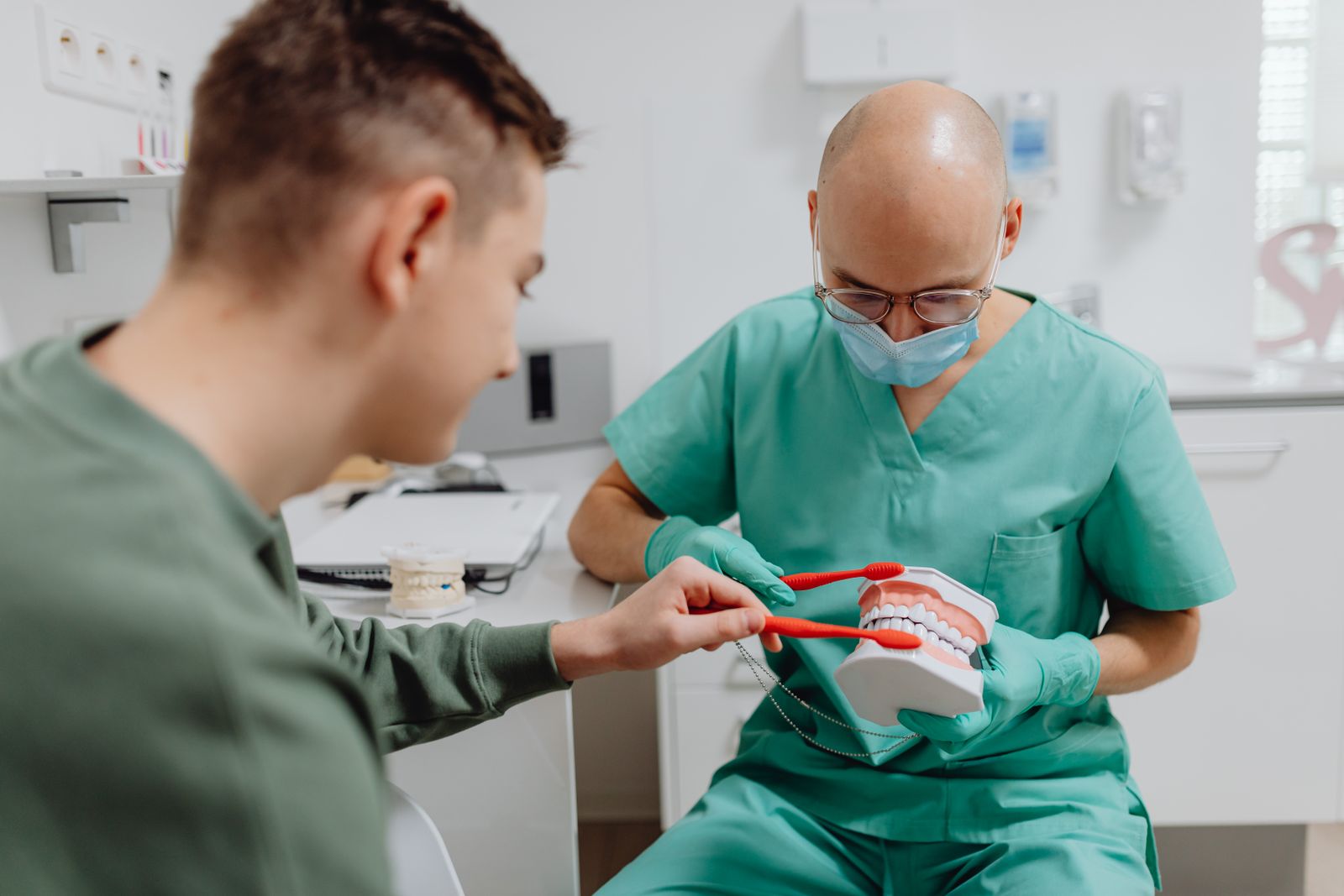
Plaque-disclosing dye makes the missed spots visible in a mirror, and a few minutes of coaching with your own brush usually changes the result at the next visit.
What this looks like at Trinity Dental Care Centre
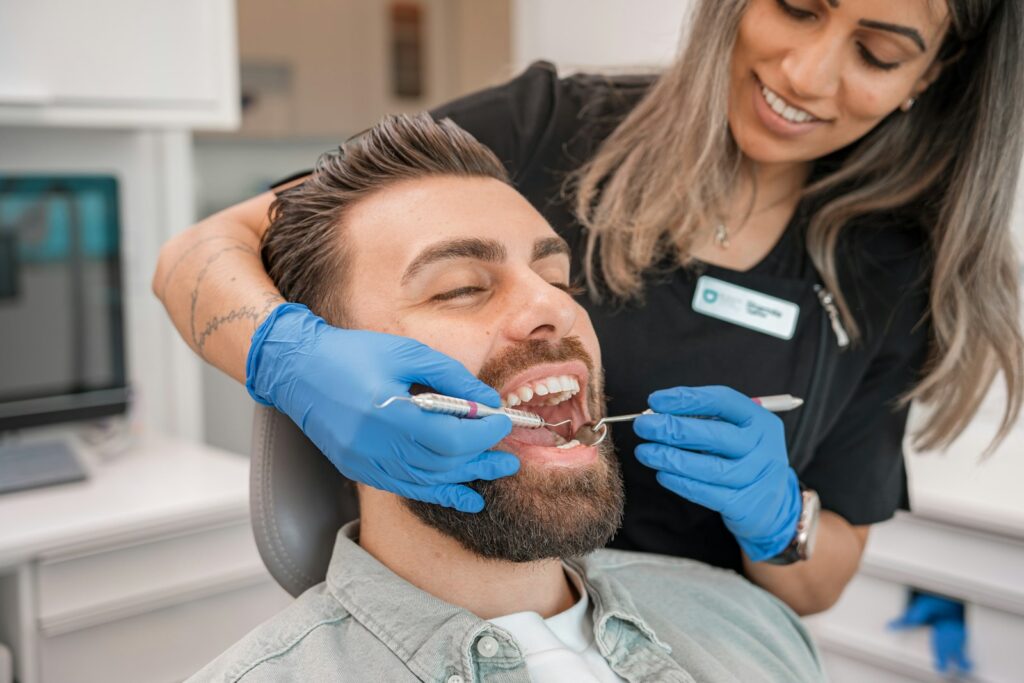
A scale and clean at 161 George Street, Liverpool, is not just a polish. We remove the hardened plaque your brush cannot shift, point out where it was building up, and show you how to adjust your technique for your own teeth, whether that is a crowded lower arch, a bridge, braces or receding gums.
Principal dentist Dr Maher Farag has more than 30 years’ experience and consults in Arabic and English, which helps when a grandparent supervises the children’s brushing. Eligible children can have a check-up and clean through the Medicare Child Dental Benefits Schedule at our kids’ dentist appointments. We are open Monday to Friday 8am to 6pm and Saturday 8am to 1pm, with on-the-spot health fund claiming.
Frequently asked questions
Is an electric toothbrush better than a manual one?
A manual brush used well cleans perfectly adequately. Electric brushes help people who brush too hard, too briefly or with poor technique, because the timer and pressure sensor correct those habits. If you have one, hold it on each tooth for a moment rather than scrubbing.
Should I brush before or after breakfast?
Either works, as long as you avoid brushing within half an hour of acidic food or drink. Brushing before breakfast removes overnight plaque and leaves fluoride on the teeth before you eat, which is why many dentists prefer it.
How often should I have a professional clean?
It depends on how quickly you build tartar and whether you have had gum disease. Our article on how often to visit the dentist explains how we set the interval for each person.
Book a scale and clean in Liverpool
If it has been a while since your last professional clean, or you would like your technique checked, our scale and clean page explains what is included. Book online or call (02) 9822 7107.
This article is general information only and is not a substitute for advice from your dentist.